Transportation Systems Research
The Transportation Systems Research (TSR) group advances shared, electric, connected, and automated mobility systems to address critical environmental and energy challenges in transportation.
By leveraging sensing and communication technologies, advanced computing, and control theory, TSR develops mobility systems and infrastructure that enhance safety, mobility, environmental health, equity, and economic outcomes.
Research Focus Areas
Select an image or title to open the full overview and highlighted projects for each area of Transportation Systems Research.
 Eco-Friendly Intelligent Transportation Systems Using connected vehicles and infrastructure to improve efficiency, reduce emissions, and support safer travel. Learn more
Highlighted Projects
Traffic Optimization for Signalized Corridors
The Traffic Optimization for Signalized Corridors system combines cooperative adaptive cruise control with eco-approach and departure strategies. Researchers evaluate the vehicle and infrastructure architecture in simulation to study mobility, environmental benefits, and deployment risks.
Lead faculty: Guoyuan Wu and Matthew Barth.
Toyota Digital Twin
Researchers developed a cooperative ramp-merging prototype using the Unity game engine, vehicle-to-cloud communication, and field experiments near CE-CERT. The work connects simulation with real vehicles to evaluate connected transportation applications.
Lead researcher: Guoyuan Wu.
V2X Connected Vehicle Early Deployment Applications
This work models and evaluates connected vehicle applications such as lane-speed monitoring, emergency brake alerts, lane-hazard prediction, and traffic-jam prevention using roadway networks and microscopic traffic simulation.
Research team included Guoyuan Wu, Kanok Boriboonsomsin, Matthew Barth, and Mike Todd.
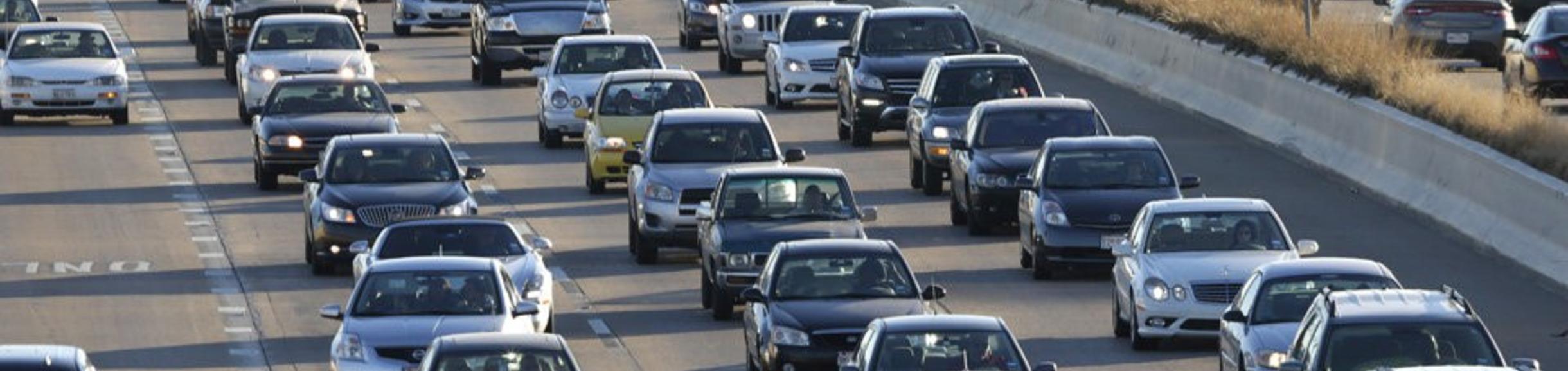 Health-Based Intelligent Transportation Systems Developing transportation tools that reduce near-road pollution exposure and protect community health. Learn more
Highlighted Projects
Near-Road Particulate Matter Measurements and Modeling
Researchers connect vehicle emissions model estimates with near-roadway measurements by studying how gasoline exhaust changes during dilution and cooling. The work supports improved estimation of particulate matter near heavily traveled roads.
Lead researchers included Matthew Barth and collaborating air quality faculty.
Traffic Congestion and Near-Road Air Pollution
This study combines real-time traffic characteristics, weather, and ambient air quality data to quantify how congestion contributes to near-road pollution and to develop models that support transportation and public health decisions.
Lead researcher: Guoyuan Wu, with collaborating air quality researchers.
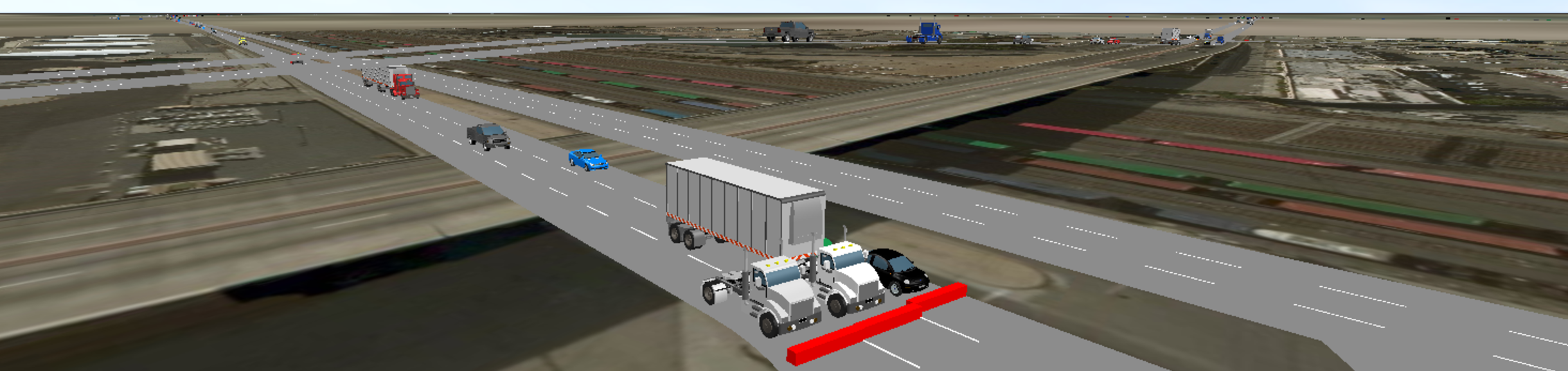 Innovative Vehicle Evaluation Techniques Combining simulation, modeling, virtual reality, and connected platforms to evaluate emerging vehicles. Learn more
Highlighted Projects
Transportation Simulation Plug-In Tools
Researchers develop and apply tools for microscopic traffic simulation, multi-agent modeling, vehicle simulation, virtual reality, safety assessment, and emissions modeling to evaluate connected and automated transportation technologies.
Lead faculty included Matthew Barth, Kanok Boriboonsomsin, and Guoyuan Wu.
Comprehensive Modal Emissions Model
The Comprehensive Modal Emissions Model estimates second-by-second fuel use and tailpipe emissions across light-duty and heavy-duty vehicle technologies and operating conditions.
Lead faculty included Matthew Barth and Kanok Boriboonsomsin.
Mobile Energy and Emissions Telematic System
CE-CERT adapted its emissions modeling capability to operate onboard and in real time using information from a vehicle engine control module, creating a lower-cost platform for estimating energy use and emissions during operation.
Lead researcher: Matthew Barth, with collaborating CE-CERT faculty.
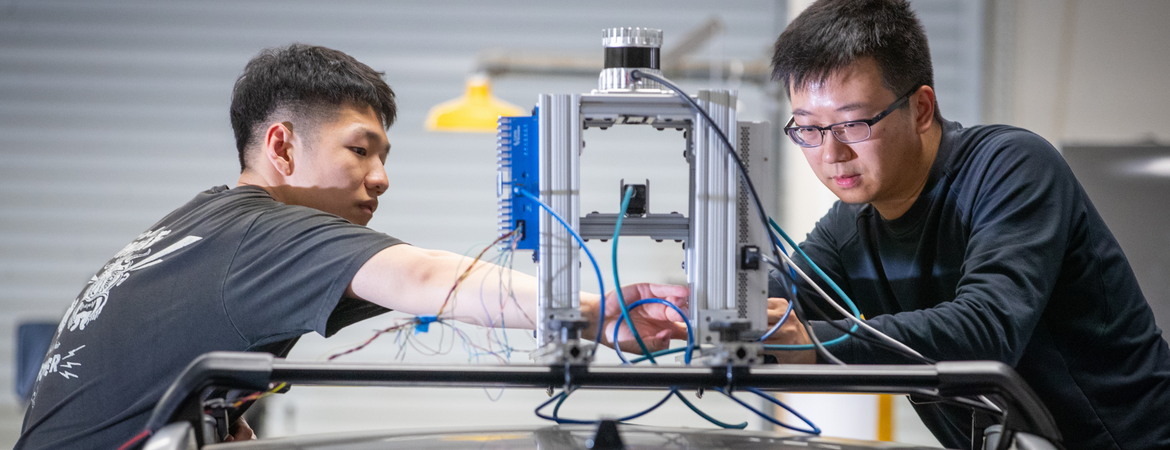 On-Board Vehicle Intelligent Systems Advancing onboard sensing, vehicle control, mapping, and cooperative automation for smarter mobility. Learn more
Highlighted Projects
Sim2Real Ecosystem for Cooperative Autonomy
This project connects large-scale simulation with real-world autonomous vehicle deployment. It combines high-performance computing, edge artificial intelligence, communication systems, and vehicle platforms to support cooperative driving.
Lead researcher: Hang Qiu.
On-Board Vehicle Control and Mapping
Researchers integrate intelligent powertrain control, vehicle dynamics, LiDAR-enabled mapping, and crowdsourced data to improve how vehicles perceive road conditions and make efficient operating decisions.
Research team: CE-CERT Transportation Systems Research.
UCR EcoCAR R’VOLT Research Platform
Following the EcoCAR EV Challenge, UCR’s reengineered Cadillac LYRIQ returned to CE-CERT as a working platform for research in electric vehicle systems, connected and automated technologies, and energy-efficient transportation.
Research and student training platform: UCR EcoCAR and CE-CERT.
 Shared Mobility Evaluating carsharing, micromobility, and connected mobility systems that reduce reliance on personal vehicles. Learn more
Highlighted Projects
Connected and Automated Vehicles Coupled With Shared Mobility
This research combines real-world and simulated data to evaluate how connected and automated vehicles and shared mobility may affect travel behavior, traffic performance, vehicle miles traveled, and energy efficiency across California.
Lead researchers included Matthew Barth and Guoyuan Wu.
Coordinated Shared Micromobility
The project develops an analysis framework for shared bikes, e-bikes, and e-scooters, examining system benefits, safety, asset management, equity, and opportunities for coordinated public-agency management.
Research team: CE-CERT Transportation Systems Research.
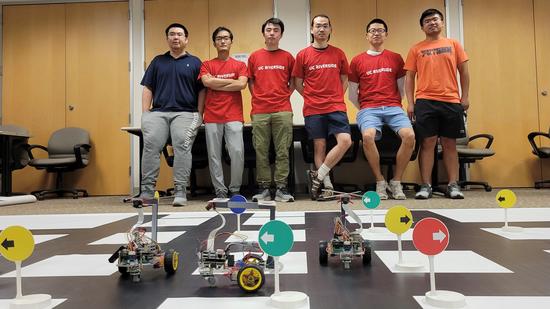 Smart Cities and Innovative Infrastructure Connecting vehicles, signals, sensors, and public infrastructure to build healthier and more efficient communities. Learn more
Highlighted Projects
AUTOTRAC Small-Scale Connected Vehicle Testbed
Researchers built a small-scale connected and automated vehicle environment using onboard computers, LiDAR, cameras, robot operating systems, and vehicle-to-vehicle communications to test cooperative driving in freeway and urban scenarios.
Faculty advisors included Guoyuan Wu, Kanok Boriboonsomsin, and Matthew Barth.
Digital Sidewalk Inventories
This work uses aerial imagery, digital roadway networks, and machine learning to identify existing and missing sidewalks and create connected sidewalk inventories more efficiently.
Lead researcher: Guoyuan Wu, with collaborating faculty.
Managed Lanes Design
Researchers use traffic microsimulation to evaluate alternative high-occupancy vehicle lane configurations that improve throughput, reduce delay, and support more efficient freeway operations.
Lead researcher: Kanok Boriboonsomsin.
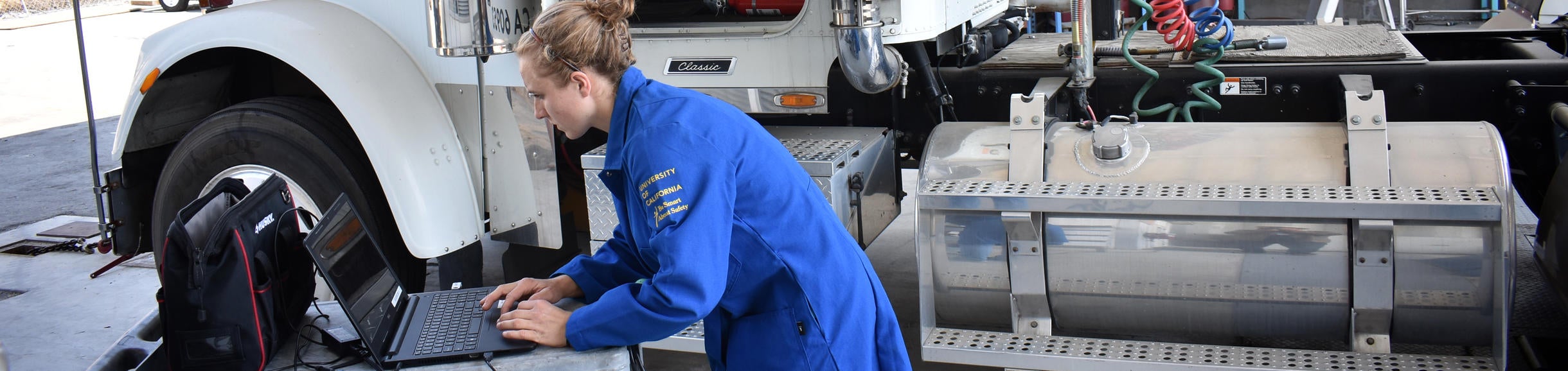 Sustainable Freight Applying electrification, connected systems, and eco-driving strategies to the movement of goods. Learn more
Highlighted Projects
Hybridization and Electrification of Off-Road Equipment
This project evaluates the technical potential for hybrid and fully electric construction and agricultural equipment to reduce fossil fuel use and emissions.
Lead researchers: Kanok Boriboonsomsin and Guoyuan Wu.
Electric Trucks and Connected Drayage Technologies
Researchers evaluate energy and emissions benefits from battery-electric and plug-in hybrid trucks combined with connected vehicle applications such as eco-approach and departure.
Research team included Kanok Boriboonsomsin and Alexander Vu.
ECO-FRATIS
CE-CERT and regional partners deployed connected traffic signals near the Port of Los Angeles to provide real-time signal information and support eco-driving applications on freight corridors.
Lead faculty: Kanok Boriboonsomsin, Guoyuan Wu, and Matthew Barth.
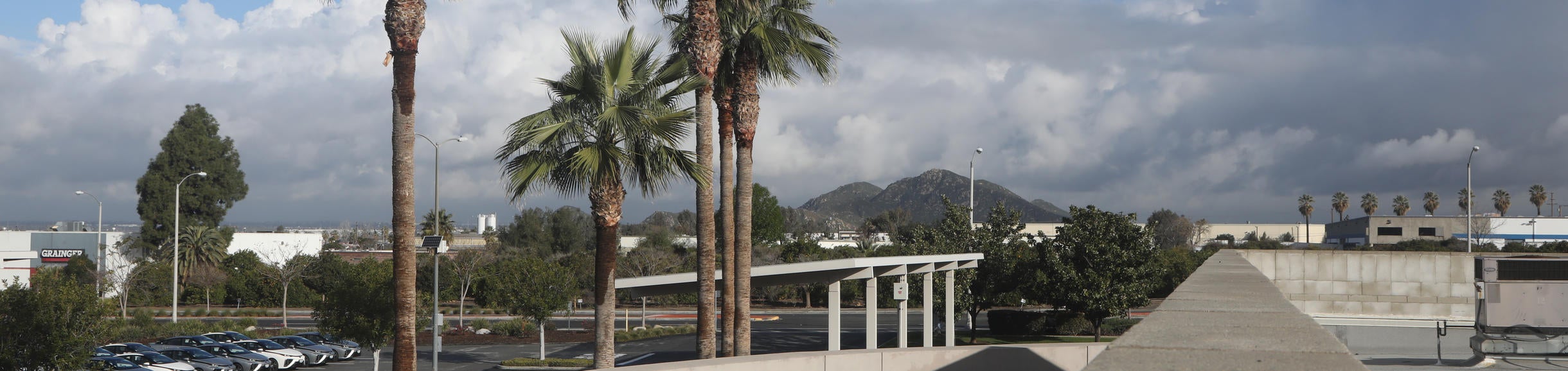 National Center for Sustainable Transportation Connecting research, education, policy, and partnerships to advance sustainable transportation nationwide. Learn more
Shared, Electric, Connected, and Automated Vehicle Testing
CE-CERT combines advanced testbeds, transportation simulation, hardware-in-the-loop evaluation, connected vehicle fleets, and real-world roadway infrastructure to assess emerging mobility systems.
Faculty List
- Matthew Barth, Professor of Electrical & Computer Engineering; BCOE Associate Dean for Research & Graduate Education
- Kanok Boriboonsomsin, Research Faculty; CE-CERT Associate Director of Finance & Administration
- Guoyuan Wu, Research Faculty; Adjunct Professor of Electrical & Computer Engineering
- Peng Hao, Research Faculty; Adjunct Professor of Electrical & Computer Engineering
- George Scora, Research Faculty
- Hang Qiu, Assistant Professor of Electrical & Computer Engineering
- Eunjeong Hyeon, Assistant Professor of Mechanical Engineering
- Konstantinos Karydis, Associate Professor of Electrical & Computer Engineering
Connect With Transportation Systems Research
Discuss research partnerships, shared and connected mobility, vehicle testing, simulation, intelligent infrastructure, and sustainable freight with CE-CERT.